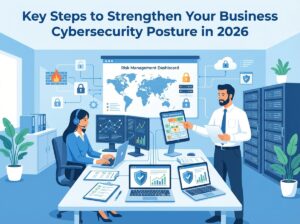
Cybersecurity 2026: Essential Steps Every Small Business Must Take Now
Cyber threats targeting small businesses are growing more complex each year. By 2026, relying on outdated defenses puts your data and operations at serious risk. This guide lays out essential steps in small business cybersecurity you need now, including managed IT services and zero trust strategies, to protect your business and stay compliant. For more information, you can visit this link.
Strengthening Your Cybersecurity Posture

Cybersecurity threats are evolving daily, making it crucial for businesses to stay ahead. Here’s what you can do to strengthen your defenses.
Implement Zero Trust Architecture
The concept of zero trust is simple but effective: trust nothing and verify everything. Traditional network security relies on the idea of trusted internal networks. Zero trust flips this. It assumes every connection, whether inside or outside the network, might be compromised.
To start, map your network. Know who has access to what. Then, segment your network. This limits access to sensitive data. Use identity verification for each access request. Tools like DNS filtering can add an extra layer of security by blocking malicious sites. With zero trust, you minimize risks of unauthorized access.
Multi-Factor Authentication and Passwordless Security
Passwords alone aren’t enough anymore. Multi-factor authentication (MFA) adds layers of security. It requires more than one verification method. This could be a text message code or a fingerprint scan.
MFA is essential, but going passwordless is the future. With passkeys, you reduce reliance on traditional passwords. They are easier for users and harder for attackers to abuse. For added safety, combine MFA with passwordless solutions. This dual approach strengthens access controls.
Ransomware Protection and Incident Response
Ransomware can cripple a business. Protect yourself by regularly backing up data. Automated backups ensure you can recover without paying a ransom. Use robust ransomware protection software to detect threats early.
Prepare an incident response plan. This outlines steps to take when an attack occurs. Include how to isolate affected systems and communicate with stakeholders. Testing your plan through tabletop exercises can reveal weaknesses. Being prepared reduces downtime and financial loss.
Managed IT and Security Services

Managed IT and security services offer peace of mind. Professional teams monitor threats and manage responses, allowing you to focus on your business.
24/7 Monitoring and Endpoint Management
With 24/7 monitoring, threats are caught before they cause damage. Managed service providers (MSPs) like Degarmo Technologies use tools such as SIEM for threat detection. These tools analyze data in real-time, identifying unusual activity.
Endpoint management is crucial too. Laptops, phones, and tablets need protection. EDR solutions monitor and respond to threats on these devices. By securing endpoints, you safeguard your network from external attacks.
Vulnerability and Patch Management Strategies
Hackers exploit vulnerabilities in outdated software. Regular updates are vital. Patch management services ensure your systems are up-to-date. This protects against known weaknesses.
Conduct regular vulnerability assessments. These identify potential entry points for attackers. With a proactive approach, you fix issues before they are exploited. This minimizes risks and maintains system integrity.
Cloud Security for Microsoft 365 and Azure
Cloud services offer flexibility but require robust security. Microsoft 365 and Azure have built-in security features. Yet, configuring them correctly is key. Cloud security services help set up secure environments, from user permissions to data encryption.
Use identity and access management (IAM) to control who accesses cloud resources. Encryption protects data from unauthorized viewing. With proper cloud security measures, you leverage the benefits without compromising safety.
Compliance and Risk Management

Navigating compliance can be daunting. Understanding regulations helps avoid penalties and ensures data protection.
Navigating HIPAA, PCI DSS, and SOC 2
Compliance with standards like HIPAA, PCI DSS, and SOC 2 is essential in regulated industries. These standards protect sensitive information. They also build trust with clients.
Engage professionals familiar with these regulations. They help ensure your processes meet required standards. This expertise prevents violations that could harm your reputation. Compliance is not just about avoiding fines; it’s about maintaining trust.
Developing a Comprehensive Incident Response Plan
An incident response plan outlines how to handle cyber incidents. It should cover detection, containment, eradication, recovery, and lessons learned. Each stage requires specific actions.
Regularly test your plan. Tabletop exercises simulate attacks, revealing plan weaknesses. Involve all stakeholders from IT to public relations. A well-rehearsed plan minimizes damage and ensures quick recovery.
Third-Party and Supply Chain Risk Management
Third-party vendors can introduce risks. Vet them carefully. Ensure they follow strong cybersecurity practices. Regular audits and assessments are necessary.
Supply chain risks are similar. Know your suppliers and their security practices. Implement strategies to mitigate risks from these external sources. By managing third-party risks, you maintain a robust security posture.
In conclusion, cybersecurity for small businesses is not just a necessity; it’s an investment in your business’s future. By taking proactive steps, you ensure resilience in an ever-changing threat landscape. For more detailed strategies and steps, check out our in-depth guide on small business cybersecurity.